

A new article published! Assessment of Heavy Metal Contamination and Pollution Indices in Agricultural Soils of Hebron Governorate, Palestine.
📅 2026-01-18
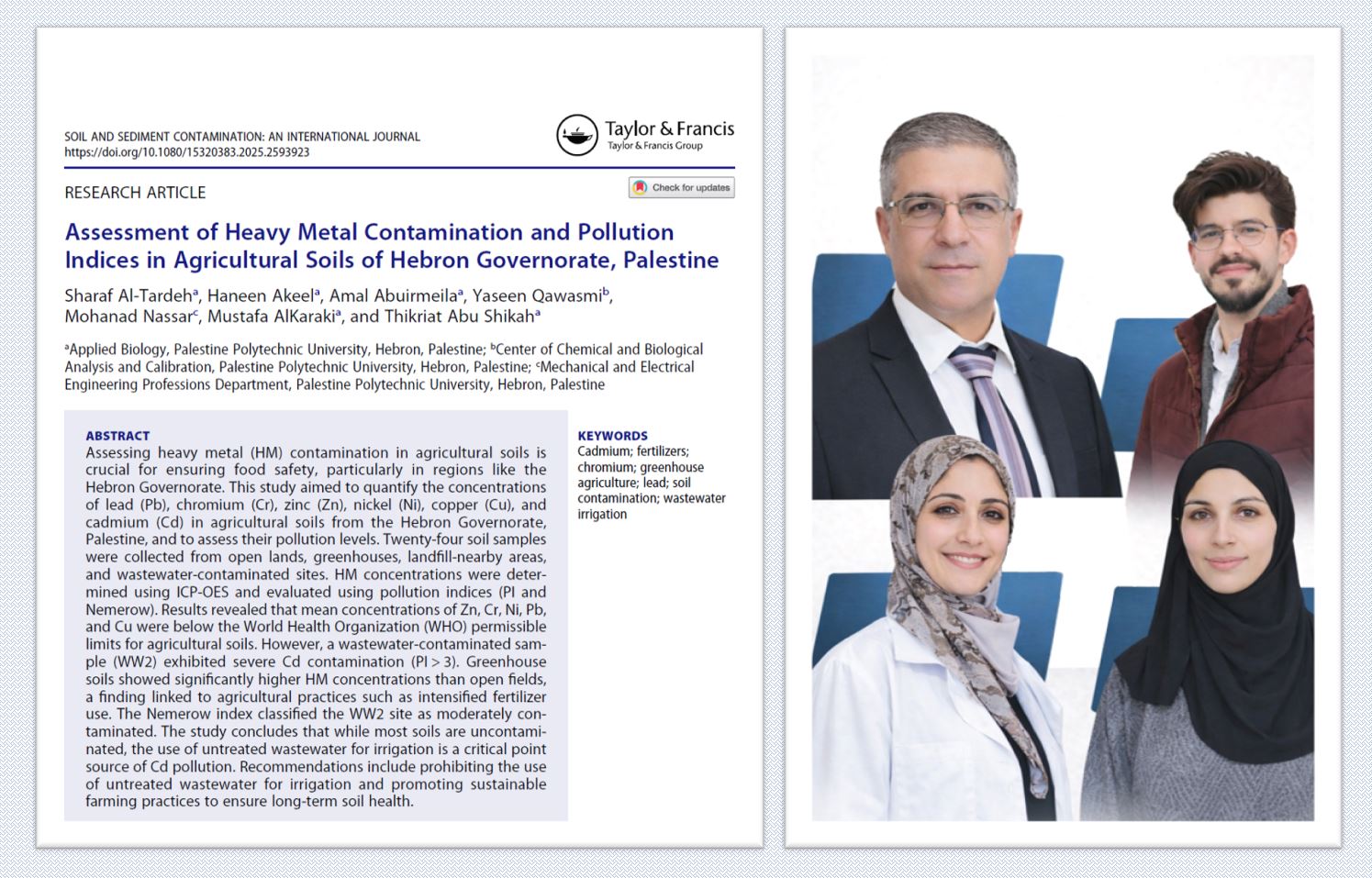
Assessing heavy metal (HM) contamination in agricultural soils is crucial for ensuring food safety, particularly in regions like the Hebron Governorate. This study aimed to quantify the concentrations of lead (Pb), chromium (Cr), zinc (Zn), nickel (Ni), copper (Cu), and cadmium (Cd) in agricultural soils from the Hebron Governorate, Palestine, and to assess their pollution levels. Twenty-four soil samples were collected from open lands, greenhouses, landfill-nearby areas, and wastewater-contaminated sites. HM concentrations were determined using ICP-OES and evaluated using pollution indices (PI and Nemerow). Results revealed that mean concentrations of Zn, Cr, Ni, Pb, and Cu were below the World Health Organization (WHO) permissible limits for agricultural soils. However, a wastewater-contaminated sample (WW2) exhibited severe Cd contamination (PI > 3). Greenhouse soils showed significantly higher HM concentrations than open fields, a finding linked to agricultural practices such as intensified fertilizer use. The Nemerow index classified the WW2 site as moderately contaminated. The study concludes that while most soils are uncontaminated, the use of untreated wastewater for irrigation is a critical point source of Cd pollution. Recommendations include prohibiting the use of untreated wastewater for irrigation and promoting sustainable farming practices to ensure long-term soil health.
https://doi.org/10.1080/15320383.2025.2593923